

Dental Implants
A long-term solution for missing teeth
Losing a tooth can affect much more than your smile. Missing teeth may reduce chewing function, affect speech and confidence, and contribute to progressive loss of the supporting jawbone.
Dental implants provide a well-established, natural-looking solution for replacing missing teeth and stabilising loose or uncomfortable dentures. By replacing the missing tooth root, an implant provides a strong foundation for a crown, bridge or implant-supported prosthesis while helping to preserve the jawbone.
Associate Professor Christian Freudlsperger and Mr Nigel Parr combine specialist oral and maxillofacial surgical expertise with advanced three-dimensional imaging and digital treatment planning. From straightforward single-tooth replacement to complex full-arch rehabilitation and bone reconstruction, every treatment plan is tailored to the patient’s anatomy, functional needs and desired outcome.
UNDERSTANDING THE CONDITION
What Are Dental Implants?
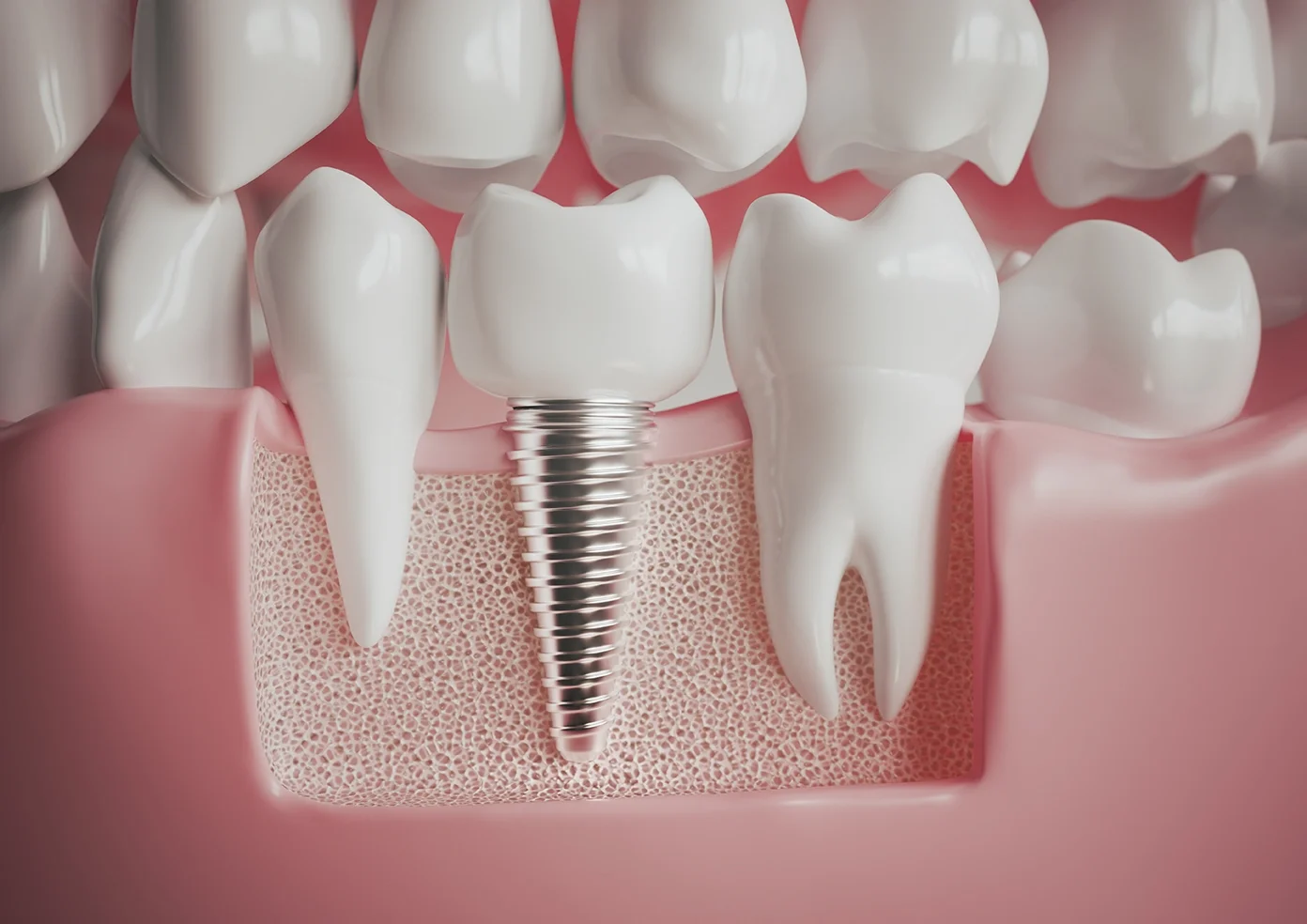
A dental implant is a biocompatible post that is surgically placed into the jawbone to replace the root of a missing tooth. Most implants are made from titanium, although ceramic implants may be considered in selected situations.
Following placement, the implant gradually bonds with the surrounding bone through a process known as osseointegration. Once stable, it can support a natural-looking replacement tooth or dental prosthesis.
An implant restoration usually consists of three components:
• The implant fixture, which is positioned within the jawbone
• The abutment, which connects the implant to the restoration
• The crown, bridge or prosthesis, which replaces the visible teeth
Implants may be used to replace a single tooth, several missing teeth or an entire dental arch. They can also provide improved support and stability for removable dentures.
Why Are Teeth Lost?
Teeth may be lost for many reasons, including:
• Advanced dental decay
• Periodontal or gum disease
• Dental trauma or sports injuries
• Cracked or fractured teeth
• Failed root canal treatment
• Congenitally missing teeth
• Infection around a tooth or previous restoration
• Failure of an existing crown, bridge or dental implant
The reason for tooth loss is carefully assessed before implant treatment. Any active infection, gum disease or underlying dental condition should be appropriately managed to provide the best foundation for long-term implant success.
Consequences of Missing Teeth
An untreated gap can affect both the appearance and function of the mouth. Over time, the jawbone in the area of the missing tooth may reduce in height and width because it is no longer stimulated by a natural tooth root.
Other possible consequences include:
• Movement or tilting of neighbouring teeth
• Over-eruption of the opposing tooth
• Changes to the bite
• Reduced chewing efficiency
• Food trapping and difficulty maintaining oral hygiene
• Speech difficulties
• Changes in facial support and appearance
• Increasing complexity of future dental rehabilitation
Timely assessment can help preserve treatment options and determine whether implant placement, bone preservation or another form of tooth replacement is most appropriate.
Why Choose Dental Implants?
Dental implants can provide important functional and aesthetic advantages over traditional tooth-replacement options.
Compared to Dentures:
• Greater stability when eating and speaking
• No movement or slipping during normal function
• Reduced reliance on denture adhesives
• Improved chewing confidence
• Less pressure and irritation on the gums
• Better preservation of the supporting jawbone
Compared to Bridges:
• Healthy neighbouring teeth usually do not need to be reduced
• The missing tooth can be replaced independently
• Easier access for cleaning between the teeth
• Improved preservation of the jawbone beneath the missing tooth
• Greater flexibility if future dental treatment is required
Additional Benefits:
• Natural-looking replacement of missing teeth
• Restoration of chewing function
• Improved comfort and confidence
• Support for facial structure
• Long-term stability with appropriate care
• The ability to replace anything from one tooth to a complete dental arch
PROCEDURE & TREATMENT OPTIONS
Initial Consultation & Assessment
Your consultation includes an assessment of your teeth, gums, bite, medical history and available jawbone. CBCT imaging and digital scans may be used to evaluate the bone, nerves and sinuses and to plan the ideal implant position.
This digital approach supports accurate, restoration-driven planning and allows close coordination with your dentist, prosthodontist and dental technician.
Types of Implant Treatment
Single Tooth Replacement: One implant supports an individual crown—the most conservative, aesthetic solution.
Multiple Teeth Replacement: Multiple implants support a fixed bridge without involving adjacent natural teeth.
Full Arch Replacement: Several implants (typically 4-6 per arch) support complete fixed prostheses, including All-on-4/All-on-6, implant-supported overdentures, or fixed hybrid prostheses.
Immediate vs. Delayed Placement: Immediate placement at time of extraction when suitable, or delayed placement after healing when infection present or inadequate bone remains.
The Implant Placement Procedure
Implant surgery is usually performed as day treatment under local anaesthetic. IV sedation or general anaesthesia may be available for more complex procedures or anxious patients.
The implant is placed into the jawbone according to the digital treatment plan. A customised surgical guide may be used where appropriate to improve accuracy. The gum is then closed or a healing component is placed while the implant integrates with the bone.
Adjunctive Procedures
Where there is insufficient bone or gum tissue, additional treatment may be required, including:
• Socket preservation
• Bone grafting
• Ridge augmentation
• Sinus lift surgery
• Soft-tissue grafting
These procedures may be completed before or at the same time as implant placement.Healing & Osseointegration
Osseointegration typically takes 3-4 months in the lower jaw, 4-6 months in the upper jaw, or longer if bone grafting was performed. Temporary restorations may be provided during this period.
Healing & Osseointegration
The implant usually requires approximately three to six months to bond with the jawbone. Healing time depends on the implant location, bone quality, general health and whether grafting was required.
Temporary teeth or dentures may be provided during this period where appropriate.
Restoration Phase
Once healing is complete, your dentist or prosthodontist takes a digital scan or impression and prepares the final crown, bridge or implant-supported prosthesis.
Associate Professor Freudlsperger and Mr Parr work closely with referring clinicians and dental technicians to ensure the implant position supports the intended functional and aesthetic result.
Why Choose Oral & Facial Surgery, Remuera?
Specialist Implant Expertise: Associate Professor Christian Freudlsperger and Mr Nigel Parr are specialist oral and maxillofacial surgeons experienced in implant surgery, bone grafting and complex jaw reconstruction.
Advanced Digital Planning: CBCT imaging, digital scans and virtual planning support precise implant positioning and help protect important structures such as nerves and sinuses.
Complex Case Management: Specialist surgical expertise is particularly valuable for patients with significant bone loss, previous implant failure, facial trauma or altered jaw anatomy.
Collaborative Long-Term Care: We work closely with your dentist, prosthodontist and dental technician to coordinate implant placement, restoration and ongoing maintenance.
RISKS & RECOVERY
Understanding the Risks
Dental implant surgery has a high level of long-term success, but possible complications include infection, delayed healing, implant failure, gum recession, nerve disturbance, sinus involvement and bone loss around the implant.
Factors Affecting Success: Smoking, poor oral hygiene, uncontrolled diabetes, gum disease and certain medications may increase these risks. Your individual risks, benefits and alternatives will be discussed before treatment.
A/Prof Freudlsperger will discuss all potential risks, benefits, and alternatives specific to your individual case in detail during your consultation, ensuring you have a complete understanding before proceeding with treatment.
What to Expect During Recovery
Day of Surgery: Numbness for several hours, rest important, soft cool foods, oozing normal, apply ice packs.
First 48-72 Hours: Swelling and discomfort peak. Take prescribed medications, continue ice packs, maintain soft diet, sleep with head elevated.
First Week: Most swelling subsides, discomfort decreases. Many return to work within 2-4 days. Begin gentle salt water rinses. Sutures removed after 7-10 days if non-dissolvable.
Weeks 2-4: Continued healing, gradually expand diet, avoid chewing directly on implant site during osseointegration.
Months 1-6: Critical osseointegration period. Temporary restorations worn as directed.
Restoration Phase: Multiple appointments for impressions, try-ins, and final placement once healing complete.
Post-Operative and Long-Term Care
Immediate post-operative care includes managing bleeding, ice application, rest, prescribed medication, soft diet, and avoiding rinsing or straws initially. Ongoing oral hygiene, dietary management, activity restrictions, and avoiding smoking are essential.
Long-Term Maintenance:
• Brushing and cleaning between the implants daily
• Regular dental and hygiene appointments
• Periodic clinical and radiographic review
• Avoiding smoking
• Wearing a night guard where grinding or clenching is present
With proper care, dental implants can last decades or even a lifetime.
BOOK YOUR APPOINTMENT
Oral & Facial Surgery Auckland
Whether you're missing a single tooth or require complete dental rehabilitation, A/Prof Christian Freudlsperger can help you achieve a natural-looking, functional smile that lasts. With internationally recognised expertise and state-of-the-art technology, you can trust you're receiving world-class implant care.