

Genioplasty / Chin Augmentation
Refining facial balance and lower-face harmony
The chin plays an important role in facial balance, profile and lower-face proportions. A small or recessed chin may make the nose appear more prominent, reduce jawline definition or create difficulty closing the lips comfortably. A long, prominent or asymmetric chin can also affect facial harmony.
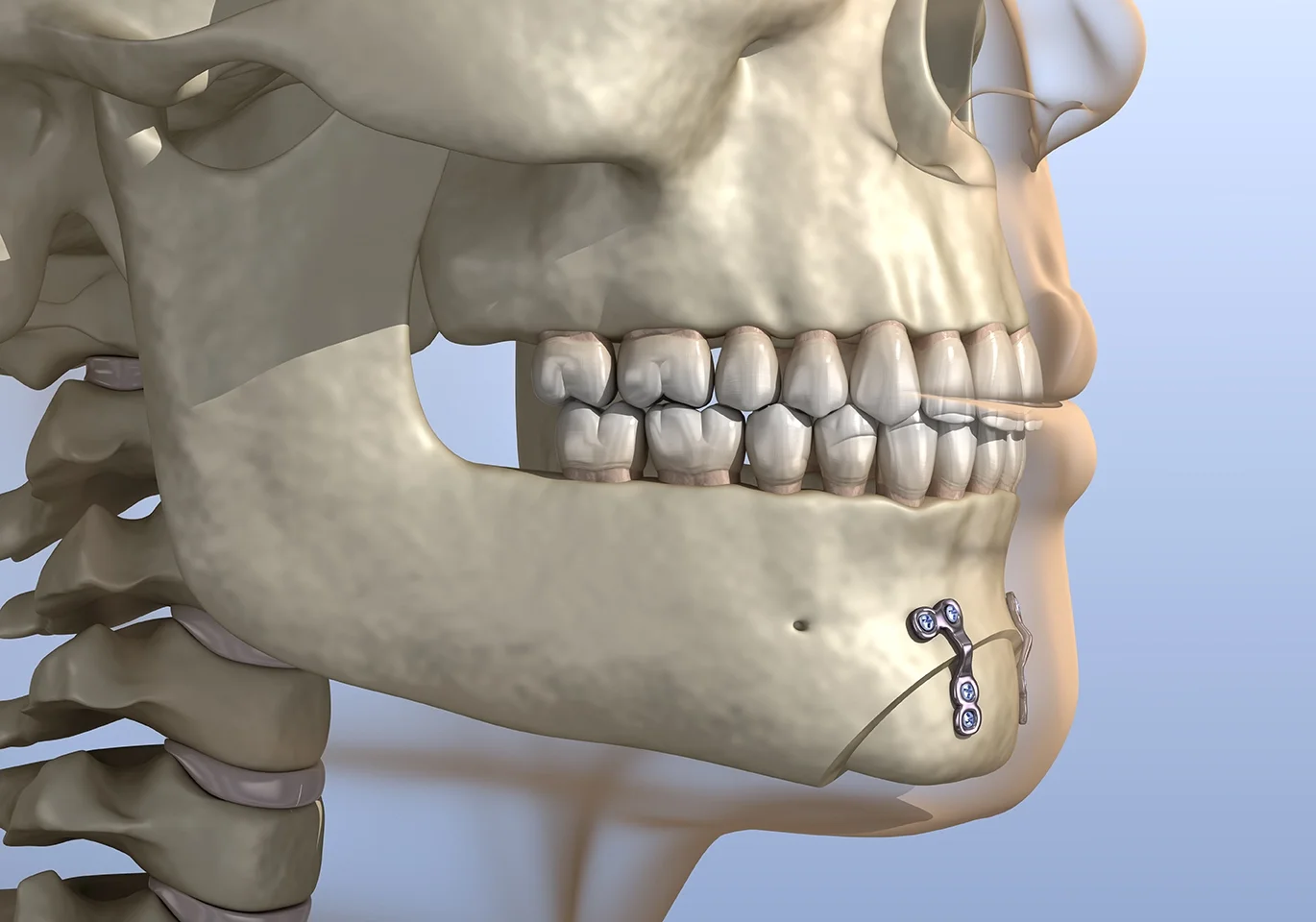
Genioplasty, also known as chin surgery or sliding genioplasty, repositions the patient’s own chin bone to improve projection, height, symmetry and overall facial balance. It may be performed as a standalone procedure or combined with corrective jaw surgery.
Associate Professor Christian Freudlsperger provides specialist assessment and treatment based on more than 20 years of international experience in orthognathic, craniofacial and reconstructive surgery. Advanced facial analysis and digital planning are used to achieve a natural, proportionate result rather than an overcorrected or artificial appearance.
UNDERSTANDING THE PROCEDURE
What are Genioplasty & Chin Augmentation?
A genioplasty repositions the front portion of the lower jaw that forms the chin. The bone can be moved:
Forward to improve a recessed chin
Backward to reduce excessive projection
Upward to shorten the lower face
Downward to increase chin height
Sideways to correct asymmetry
Rotated or reshaped to improve contour
The repositioned bone is secured with small titanium plates and screws while it heals in its new position.
Chin augmentation may also refer to placement of an implant over the existing chin bone. However, a sliding genioplasty offers greater control over three-dimensional position and uses the patient’s own bone rather than adding a surface implant.
Reasons for Considering Chin Surgery
Genioplasty may be considered for:
A small or recessed chin
Excessive chin projection
A long or vertically short chin
Chin asymmetry or deviation
Poor lower-face balance
Reduced jawline definition
Difficulty closing the lips without strain
Soft-tissue dimpling or tension over the chin
Residual profile imbalance after orthodontic treatment
Refinement of facial proportions during orthognathic surgery
Chin position should always be assessed in relation to the nose, lips, teeth, jaws and overall facial profile. A prominent or recessed chin may sometimes reflect an underlying jaw discrepancy rather than an isolated chin concern.
Is Chin Surgery Right for You?
Suitable patients have generally completed facial growth and have a specific concern regarding chin position, size or symmetry.
Assessment is particularly important to determine whether the concern is best treated with:
Genioplasty alone
Corrective jaw surgery
Combined jaw surgery and genioplasty
Non-surgical observation
Another facial procedure
The aim is to improve facial balance while preserving the individual character of the face.
PROCEDURE & TREATMENT OPTIONS
Comprehensive Assessment & Planning
Your consultation includes a detailed assessment of:
Facial profile and frontal symmetry
Chin projection, height and width
Dental bite and jaw relationship
Lip position and lip competence
Lower facial proportions
Soft-tissue thickness and contour
Previous orthodontic treatment, surgery or trauma
Your treatment goals and expectations
Photographs and appropriate imaging may be used to evaluate the chin in three dimensions. Digital planning can help determine the direction and amount of movement and assess how the proposed change relates to the remainder of the face.
Where genioplasty is planned with orthognathic surgery, the chin is assessed after the proposed upper- and lower-jaw movements have been simulated. This avoids treating the chin in isolation from the final jaw and facial position.
The Genioplasty procedure
Genioplasty is usually performed under general anaesthesia, either as day surgery or with a short hospital stay depending on the procedure and whether it is combined with jaw surgery.
The operation commonly takes approximately one to two hours when performed on its own.
The incision is usually made entirely inside the mouth. The chin bone is repositioned, secured with titanium fixation and the wound is closed with dissolvable sutures.
Surgical Techniques
Sliding Genioplasty
Sliding genioplasty is the most versatile form of chin surgery.
An incision is made inside the lower lip, leaving no visible facial scar. The chin bone is carefully divided below the tooth roots and repositioned according to the surgical plan.
The bone may be advanced, set back, lengthened, shortened or shifted sideways. It is then secured with a small titanium plate and screws.
Advantages include:
Precise three-dimensional correction
Use of the patient’s own bone
Effective correction of asymmetry
No permanent surface implant
Stable, long-term skeletal change
Ability to combine advancement with vertical or lateral movement
Chin Reduction or Reshaping
A prominent, broad or long chin may be reduced by repositioning or carefully reshaping the chin bone. Planning considers both the underlying skeleton and the overlying soft tissues to avoid an unnatural or excessively reduced appearance.
Chin Implant Placement
A chin implant adds projection by placing a shaped biocompatible implant over the existing bone.
This may be appropriate for selected patients requiring straightforward forward augmentation. However, it is less versatile than genioplasty and does not correct vertical imbalance or significant asymmetry as effectively.
Potential considerations include implant movement, infection, pressure on the underlying bone and the presence of permanent foreign material.
Combined Genioplasty and Orthognathic Surgery
Genioplasty is commonly considered as part of corrective jaw surgery.
After the upper and lower jaws are placed in their planned positions, the chin can be adjusted to improve:
Facial profile
Chin projection
Vertical lower-face proportions
Symmetry
Lip and jawline balance
Combining the procedures allows the entire facial skeleton to be planned as one coordinated treatment.
Why Choose A/Prof Christian Freudlsperger?
Specialist Facial Skeletal Expertise: Associate Professor Christian Freudlsperger has extensive experience in orthognathic, craniofacial and reconstructive surgery, providing a detailed understanding of how chin position relates to the jaws and whole face.
Advanced Digital Planning: Facial analysis and three-dimensional imaging support precise planning of chin movement, symmetry and lower-face proportions.
Individualised Surgical Options: Treatment may involve advancement, reduction, vertical correction, asymmetry correction or combined jaw and chin surgery, depending on the patient’s anatomy and goals.
Natural Facial Balance: Planning focuses on proportionate enhancement that complements the patient’s existing features rather than creating an exaggerated or operated appearance.
RISKS
Understanding the Risks of Chin Surgery
While chin surgery is generally safe, it's important to understand potential risks and complications.
A/Prof Freudlsperger will discuss all potential risks, benefits, and limitations specific to your individual case in detail during your consultation, ensuring you have complete understanding and realistic expectations before proceeding with treatment.
Common Temporary Effects:
Swelling (significant initially, gradually resolving)
Bruising around chin and neck
Numbness or altered sensation in lower lip and chin (very common initially)
Tightness or stiffness in chin area
Discomfort rather than severe pain
Difficulty with certain mouth movements initially
Temporary changes in lip position
Potential Complications:
Aesthetic dissatisfaction: Results may not meet expectations, or desired appearance may not be achievable with your anatomy
Asymmetry: Some degree of asymmetry may persist or develop during healing
Prolonged or permanent numbness: Nerve injury can cause lasting altered sensation in lower lip and chin, though this is uncommon with careful technique
Visible or palpable implant: Implant edges may be felt or occasionally seen, particularly in thin patients
Implant malposition or displacement: Implant may shift from intended position
Bone resorption: Pressure from implants can sometimes cause underlying bone thinning over time
Non-union: In genioplasty, bone may not heal properly in the new position (rare)
Hardware palpability: Plates and screws used in genioplasty may be felt through skin in thin patients
Infection: Uncommon but more problematic with implants, potentially requiring removal
Wound problems: Incision inside mouth can occasionally have delayed healing
Tooth root injury: Rare but possible if bone cut is too high in genioplasty
Changes in occlusion: Bite relationship can occasionally be affected
Ptosis (sagging): Lower lip or chin soft tissue may sag, particularly with large advancements
Scarring: External scars usually heal well, but abnormal scarring is possible
Need for revision surgery: Additional surgery may be needed to address complications or refine results
Specific Risk Factors:
Smoking increases infection risk and impairs healing
Very thin soft tissue coverage increases risk of visible or palpable implant/hardware
Previous chin surgery or trauma increases complexity
Certain medical conditions may affect healing
Realistic Expectations:
Final contour takes several months as swelling fully resolves
Some numbness may persist for months, occasionally permanently
Perfect symmetry is not achievable
Results work within limitations of your existing structure
Hardware or implants may be palpable, particularly if you're thin
Minor imperfections visible to you may not be noticed by others
Some patients may desire further refinement after healing
YOUR RECOVERY
What to expect during your recovery
Swelling, tightness and altered sensation are expected after genioplasty. Swelling usually peaks during the first two to three days before gradually improving.
First week
Swelling and bruising around the chin and lower lip
Temporary numbness or tingling
Soft or liquid diet
Careful oral hygiene and prescribed mouth rinses
Pain relief as required
Rest with the head elevated
Weeks one to two
Most patients return to office-based work or study within approximately one to two weeks. Visible swelling improves, although the chin may continue to feel firm or tight.
Weeks three to six
Diet and physical activity can gradually return toward normal. Strenuous exercise and any activity that risks impact to the chin should still be avoided.
Months three to twelve
Residual swelling continues to settle, and the final contour becomes increasingly apparent. Sensation may improve gradually over several months.
The bone usually heals into its new position over approximately six to twelve weeks, while soft-tissue refinement continues for longer.
Post-Operative Care
Successful healing is supported by:
Taking prescribed medication as directed
Maintaining careful oral hygiene
Following the recommended soft-diet progression
Avoiding smoking and vaping
Avoiding pressure or trauma to the chin
Sleeping with the head elevated during early recovery
Attending all scheduled follow-up appointments
Frequently Asked Questions
Is genioplasty the same as a chin implant?
No. Genioplasty repositions the patient’s own chin bone, while a chin implant adds material over the surface of the bone.
Genioplasty allows correction in several directions and is often more suitable for asymmetry, vertical imbalance or combined jaw surgery.
Will there be a visible scar?
No. The incision is generally made inside the lower lip, so there is no visible external facial scar.
Can genioplasty be combined with jaw surgery?
Yes. Genioplasty is frequently planned together with corrective jaw surgery to refine chin projection, symmetry and lower-face balance after the jaws have been repositioned.
Is the result permanent?
Yes. A sliding genioplasty creates a stable skeletal change by moving the chin bone and allowing it to heal in its new position. The result is designed to be long-term, although normal ageing and weight changes can still affect the surrounding soft tissues.
BOOK YOUR APPOINTMENT
Schedule Your Chin Surgery Consultation
If you are concerned about a recessed, prominent, long or asymmetric chin, or would like to discuss genioplasty as part of corrective jaw surgery, please contact Oral & Facial Surgery to arrange a specialist consultation with Associate Professor Christian Freudlsperger.
Referrals from orthodontists, dentists, medical specialists and general practitioners are welcome.