

Wisdom Teeth & Surgical Extractions
Gentle, carefully planned tooth removal
Wisdom teeth and other teeth may require removal because of pain, infection, decay, fracture, crowding, cyst formation or damage to neighbouring teeth. Specialist assessment helps determine whether extraction is necessary and which treatment and anaesthetic option will provide the safest and most comfortable experience.
Associate Professor Christian Freudlsperger and Mr Nigel Parr provide specialist oral and maxillofacial surgical care for both straightforward and complex dental extractions. Every procedure is carefully planned using clinical examination and appropriate imaging, with a focus on patient comfort, minimally traumatic surgical techniques and predictable healing.
UNDERSTANDING THE CONDITION
What Are Wisdom Teeth?
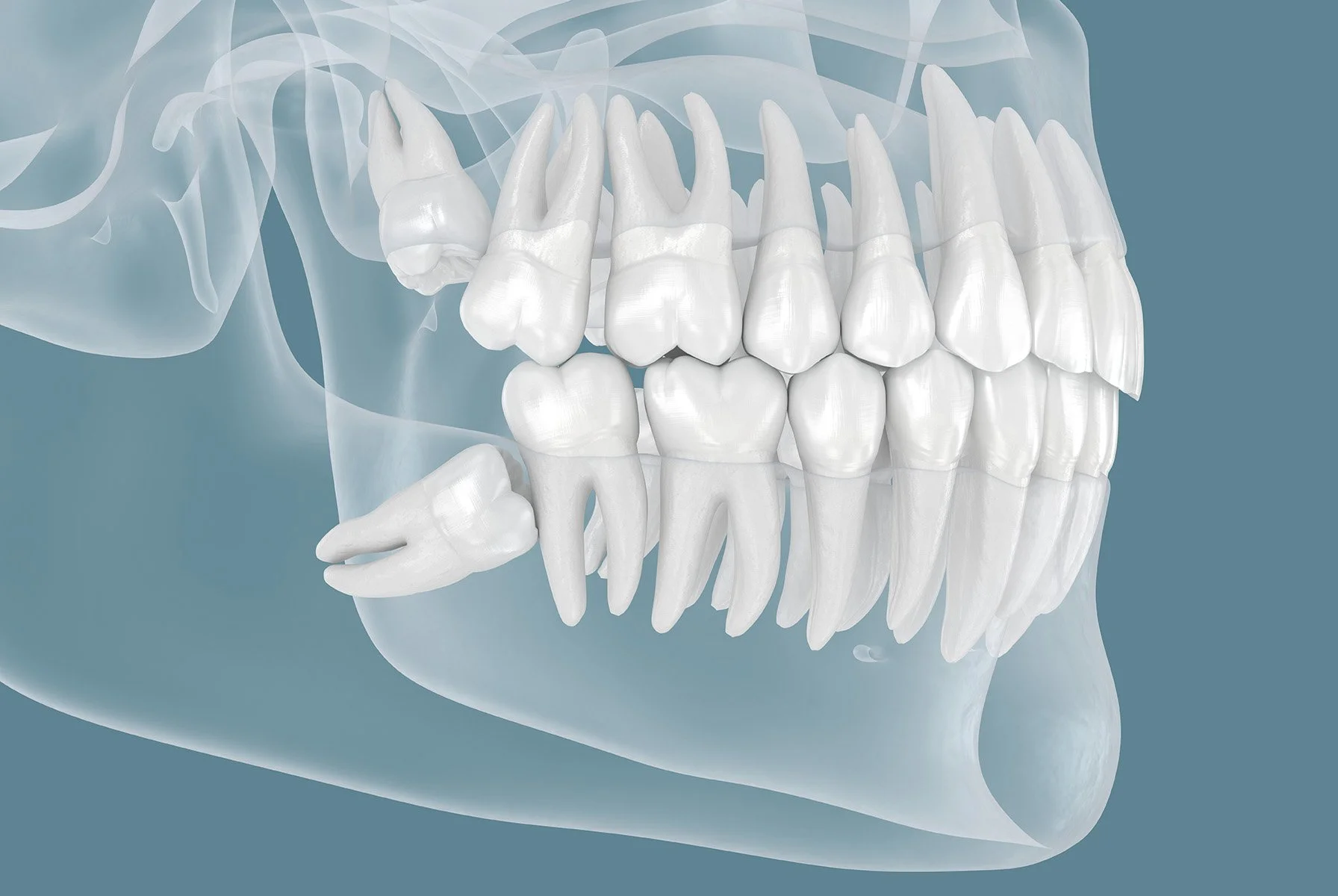
Wisdom teeth, also known as third molars, are the last teeth to develop and usually emerge between the ages of 17 and 25. Some wisdom teeth erupt normally and remain healthy. Others do not have enough space to emerge or develop in an unfavourable position within the jaw.
A wisdom tooth may be fully impacted beneath the gum and bone or only partially erupted. This can make the area difficult to clean and increase the risk of pain, infection and damage to surrounding teeth.
When Do Wisdom Teeth Need Removal?
Not all wisdom teeth need to be removed. Where a tooth is healthy and unlikely to cause problems, monitoring may be more appropriate than surgery.
Removal may be recommended when wisdom teeth are:
Impaction: When wisdom teeth don't have enough room to emerge properly, they become trapped within the jaw or only partially break through the gum, potentially growing at various angles or pressing against adjacent teeth.
Infection and Pericoronitis: Partially erupted wisdom teeth create a flap of gum tissue that can trap food particles and bacteria, leading to painful, recurring infections.
Decay and Gum Disease: Their position at the back of the mouth makes wisdom teeth difficult to clean properly, making them susceptible to decay and gum disease that can affect neighboring teeth.
Crowding and Cyst Formation: Wisdom teeth can push against other teeth as they emerge, potentially causing crowding or undoing orthodontic work. In some cases, cysts or tumors can develop around impacted teeth.
Other Teeth Requiring Surgical Extraction
Beyond wisdom teeth, surgical extraction may be needed for broken or fractured teeth, teeth with curved or long roots, impacted teeth other than wisdom teeth, teeth in difficult anatomical positions, severely decayed teeth, teeth requiring removal for orthodontic treatment, and ankylosed teeth that have fused to the bone.
PROCEDURE & TREATMENT OPTIONS
Initial Consultation & Assessment
Your consultation includes a review of your symptoms, medical history and any previous dental treatment, followed by a clinical examination and assessment of the relevant imaging.
A panoramic radiograph is often sufficient for initial planning. For more complex teeth, Cone Beam CT imaging may be recommended to provide a detailed three-dimensional view of the tooth roots, jawbone, nerves, sinuses and neighbouring teeth.
This allows the surgical approach and individual risks to be assessed carefully before treatment.
The Surgical Extraction Procedure
The procedure depends on the position and condition of the tooth. A straightforward tooth may be removed without an incision. For an impacted or difficult tooth, a small opening may be made in the gum, and a limited amount of surrounding bone may be removed.
The tooth may be divided into smaller sections so that it can be removed safely and with less disturbance to the surrounding tissues. The area is then cleaned, and dissolvable sutures are usually placed where required.
Modern surgical techniques are used to minimise tissue trauma, protect neighbouring teeth and important anatomical structures, and support comfortable healing.
Anesthesia Options
Treatment can be tailored to the complexity of the procedure, your medical history and your level of anxiety.
Options may include:
• Local anaesthetic for straightforward procedures
• Intravenous sedation for additional comfort and anxiety management
• General anaesthesia for complex cases, multiple extractions or patient preference where appropriate
Most wisdom tooth and surgical extraction procedures are completed as day surgery. The available options, preparation requirements and recovery considerations will be discussed during your consultation.
Why Choose Oral & Facial Surgery, Remuera?
Specialist Surgical Expertise: Associate Professor Christian Freudlsperger and Mr Nigel Parr are specialist oral and maxillofacial surgeons with extensive experience in wisdom tooth removal and complex dental extractions.
Advanced Assessment and Planning: Clinical examination and appropriate two- or three-dimensional imaging allow careful assessment of tooth position, root anatomy, nerves, sinuses and neighbouring teeth.
Comfortable, Individualised Treatment: Local anaesthetic, intravenous sedation and general anaesthesia may be available, allowing treatment to be tailored to the procedure and the individual patient.
Collaborative Referral Care: We work closely with dentists, orthodontists, general practitioners and other specialists, providing clear communication, surgical documentation and coordinated follow-up.
SURGICAL RISKS
Understanding the Risks of Tooth Extraction
Wisdom tooth removal and surgical extraction are commonly performed procedures, but all surgery carries some risk.
Possible complications include:
• Pain, swelling and bruising
• Temporary difficulty opening the mouth
• Bleeding or infection
• Delayed healing or dry socket
• Damage to a neighbouring tooth or restoration
• Temporary or, rarely, permanent altered sensation from nerve injury
• Communication with the maxillary sinus following removal of an upper tooth
• Retained root fragments where removal would create unnecessary risk
• The need for additional treatment or follow-up
Smoking, poor oral hygiene, active infection and some medical conditions or medications may increase the risk of complications.
Your individual risks, expected benefits and alternatives to treatment will be explained before surgery.
A/Prof Freudlsperger and Mr Nigel Parr will discuss all potential risks, benefits, and alternatives specific to your individual case in detail during your consultation, ensuring you have a complete understanding before proceeding with treatment.
What to Expect During Recovery
Swelling and discomfort are expected after surgical extraction and usually peak during the second or third day before gradually improving.
Most patients return to school, office-based work and light daily activities within a few days. Recovery may take longer following removal of several teeth or more complex surgery.
First 24 Hours: Rest is essential. Apply ice packs, take prescribed medications, stick to soft foods and cold liquids, and avoid rinsing to protect the blood clot.
Days 2-3: Swelling typically peaks. Continue ice packs and begin gentle salt water rinses as instructed.
First Week: Most patients return to work or school within 3-5 days. Swelling and discomfort gradually decrease.
Weeks 2-4: The extraction site continues to heal, and most dietary restrictions can be lifted.
Complete Healing: Soft tissue healing occurs within a few weeks; complete bone healing takes approximately 3-4 months.
During the early recovery period, you should:
• Rest and avoid strenuous activity
• Use pain relief as advised
• Apply ice packs during the first day where recommended
• Eat soft, nutritious food
• Begin gentle mouth rinsing when instructed
• Avoid smoking, vaping and drinking through a straw
• Follow the specific instructions provided by your surgical team
The gum generally heals over several weeks, while healing and remodelling of the underlying bone continues for several months.
Post-Operative Care
You will receive clear written instructions covering bleeding, swelling, pain relief, mouth care, diet and signs that require further assessment.
Good healing is supported by:
• Taking prescribed or recommended medication as directed
• Keeping the mouth clean while avoiding trauma to the surgical site
• Maintaining a soft diet during the early recovery period
• Avoiding smoking and vaping
• Attending follow-up appointments where required
• Contacting the practice if pain or swelling increases unexpectedly
Our team remains available throughout your recovery to provide advice and review any concerns.

BOOK YOUR APPOINTMENT
Oral & Facial Surgery Auckland
If you're experiencing wisdom teeth problems or have been advised you need a surgical extraction, A/Prof Christian Freudlsperger can help. With internationally recognised expertise and a patient-centered approach, you can trust you're in expert hands.