

Jaw Cyst Removal
Protecting jawbone health through accurate diagnosis and specialist surgical care
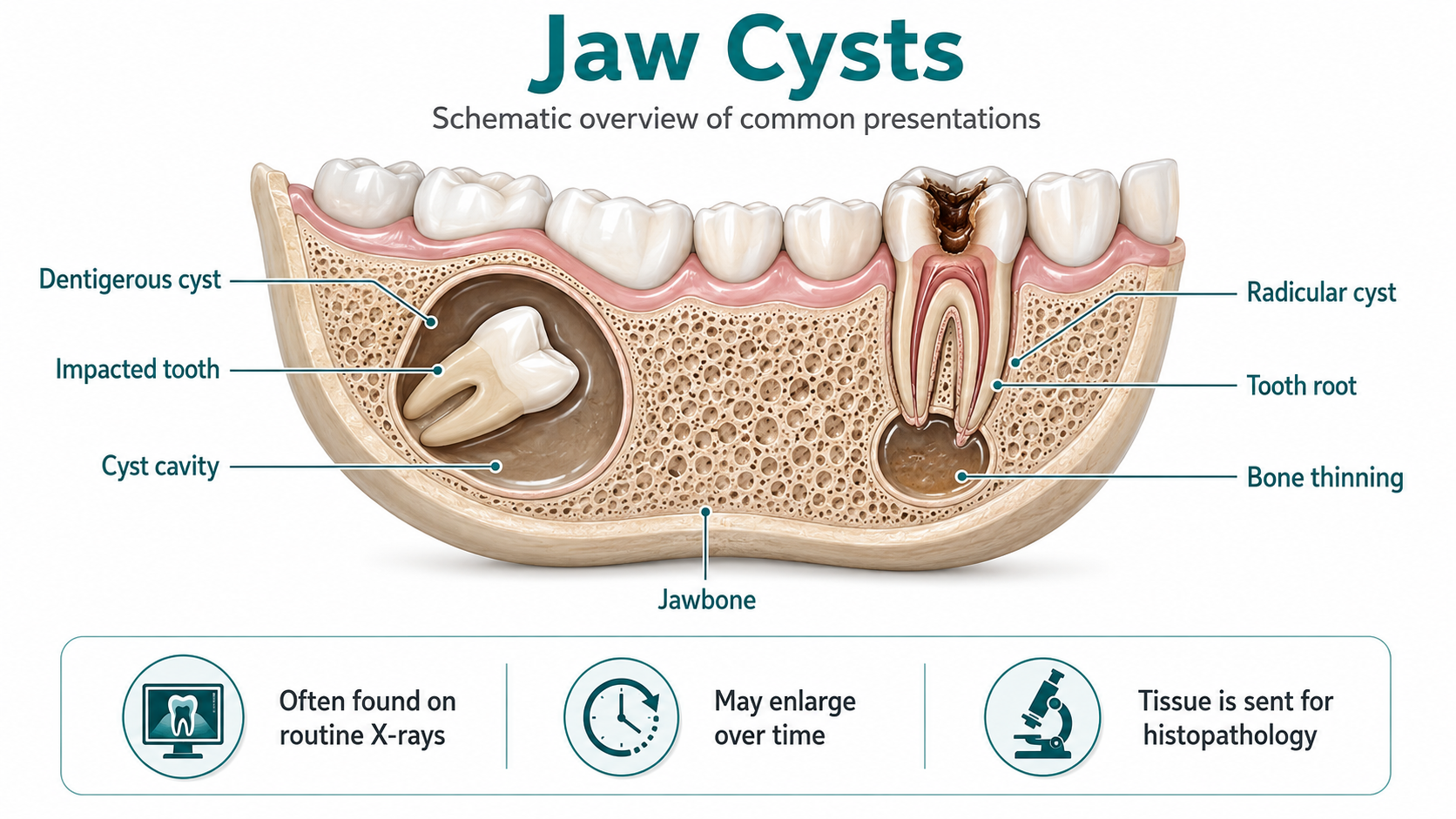
Jaw cysts are fluid-filled cavities that develop within the upper or lower jawbone. They often grow without causing symptoms and may only be discovered on a routine dental X-ray. Although most jaw cysts are benign, they can gradually enlarge, weaken the surrounding bone, displace or damage teeth, become infected, or affect nearby nerves and the maxillary sinus.
Associate Professor Christian Freudlsperger and Mr Nigel Parr provide specialist assessment and surgical management of jaw cysts, from small, well-defined lesions to larger or complex cysts requiring staged treatment, bone reconstruction or close anatomical planning.
UNDERSTANDING THE CONDITION
What is a jaw cyst?
A jaw cyst is a cavity within the jawbone that is usually lined by tissue and contains fluid or soft material. Cysts vary considerably in their cause, behaviour and risk of recurrence.
Common types include:
Radicular cysts associated with inflamed or non-vital teeth
Dentigerous cysts associated with unerupted or impacted teeth
Residual cysts remaining after a tooth has been removed
Developmental odontogenic cysts arising from tooth-forming tissues
Less common cystic or tumour-like conditions of the jaw
Because different conditions can appear similar on an X-ray, histopathological examination is important to confirm the diagnosis.
SYMPTOMS & DIAGNOSIS
Signs you may have a jaw cyst
Many jaw cysts cause no symptoms. Possible signs include:
A cyst identified unexpectedly on a dental X-ray
Slow-growing swelling of the jaw or gum
Pain, pressure or recurrent infection
Delayed eruption or absence of a permanent tooth
Movement, loosening or displacement of nearby teeth
Drainage, an unpleasant taste or a non-healing area
Altered sensation or numbness
Sinus symptoms when the upper jaw is involved
How is a jaw cyst diagnosed?
Assessment begins with a review of your symptoms, dental history and medical background, followed by a careful clinical examination.
Imaging may include:
An OPG or panoramic dental X-ray
Dental radiographs of the affected area
Cone Beam CT imaging for detailed three-dimensional assessment
Medical CT or MRI in selected complex cases
Three-dimensional imaging helps determine the size of the lesion and its relationship to nearby teeth, tooth roots, nerves, the maxillary sinus and the outer boundaries of the jaw.
In some cases, a biopsy or aspiration may be recommended before definitive treatment. Tissue removed during surgery is routinely sent for histopathological examination to establish the final diagnosis and guide any necessary follow-up.
PROCEDURE & TREATMENT OPTIONS
Treatment options
Treatment is tailored to the suspected diagnosis, size and location of the cyst, as well as the patient’s age, symptoms and overall health.
Options may include:
Enucleation, involving complete removal of the cyst lining
Decompression or marsupialisation to reduce the size of a larger cyst before definitive treatment
Removal of an associated impacted or non-restorable tooth
Preservation and monitoring of neighbouring teeth where possible
Bone grafting or reconstruction for selected larger defects
Staged surgery where the cyst is close to important anatomical structures
The aim is to remove or control the condition while preserving healthy jawbone, nerves and neighbouring teeth wherever possible.
Most smaller procedures are completed as day surgery under local anaesthetic. Intravenous sedation or general anaesthesia may be offered for larger lesions, complex surgery or patients who would benefit from additional comfort. Inpatient care can be arranged where clinically required.
Recovery
Recovery depends on the size and location of the cyst and the extent of surgery.
Following a smaller procedure, mild swelling, tenderness and bruising are common for several days. Larger cysts may require a longer period of healing, dietary modification and additional follow-up.
You will receive clear instructions covering:
Pain relief and swelling management
Oral hygiene and mouth rinsing
Diet and activity
Care of the surgical site
Signs of infection or other concerns
Timing of follow-up and repeat imaging
The bone generally fills in gradually over several months. Larger lesions and cysts with a recognised recurrence risk may require ongoing radiographic review.
Why Choose Oral & Facial Surgery, Remeura?
Specialist Jaw Surgery Expertise: Associate Professor Christian Freudlsperger and Mr Nigel Parr are specialist oral and maxillofacial surgeons experienced in the diagnosis and treatment of jaw cysts, odontogenic pathology and complex bone lesions.
Advanced Imaging and Diagnostic Precision: OPG, CBCT and other imaging techniques are used to define the extent of the lesion and its relationship to teeth, nerves and the maxillary sinus. Biopsy and histopathology support an accurate diagnosis.
Complete Surgical Management: Care ranges from minor cyst removal to decompression, removal of associated teeth, bone grafting and reconstruction for larger or recurrent lesions.
Collaborative Referral Care: We work closely with referring dentists, orthodontists, endodontists, pathologists, GPs and other specialists, providing clear communication, operative findings and follow-up recommendations.
YOUR CARE
Why early assessment matters
Jaw cysts may continue to enlarge even when they are not painful. Delayed treatment can result in greater bone loss, infection, damage to nearby teeth or nerves, and the need for more extensive surgery.
Early specialist assessment can clarify the diagnosis, preserve treatment options and often allow a simpler and more predictable approach.
Next steps
If your dentist has identified a possible jaw cyst on an X-ray, or you have symptoms requiring further assessment, please contact Oral & Facial Surgery to arrange a consultation.
We welcome referrals from dentists, orthodontists, endodontists, medical specialists and general practitioners.
BOOK YOUR APPOINTMENT
Expert Diagnosis & Treatment of Oral Pathology
If you have a concerning oral lesion or have been referred for biopsy or treatment, contact our rooms today to arrange your consultation.