

Corrective Jaw Surgery (Orthognathic Surgery)
Improving bite function, facial balance and airway support
Corrective jaw surgery, also known as orthognathic surgery, treats significant differences in the size, position or symmetry of the upper and lower jaws. It is considered when orthodontic treatment alone cannot create a stable bite or correct the underlying skeletal imbalance.
Jaw surgery may improve chewing, speech, lip closure, facial balance and, in selected patients, breathing or obstructive sleep apnoea. Because repositioning the jaws also changes the facial profile, treatment is planned to achieve both a functional bite and harmonious facial proportions.
A/Prof Christian Freudlsperger is internationally recognised for his expertise in orthognathic surgery, having performed more than 1,000 complex jaw correction procedures during as Associate Professor and Deputy Medical Director at the University Hospital Heidelberg. He is a pioneer in Virtual Surgical Planning (VSP) and a sought-after international speaker on this advanced technology.
His extensive training in craniofacial and orthognathic surgery, combined with meticulous surgical technique and a refined understanding of facial aesthetics, enables him to deliver exceptional functional and aesthetic outcomes for patients requiring jaw correction surgery.
UNDERSTANDING THE CONDITION
What is Orthognathic Surgery?
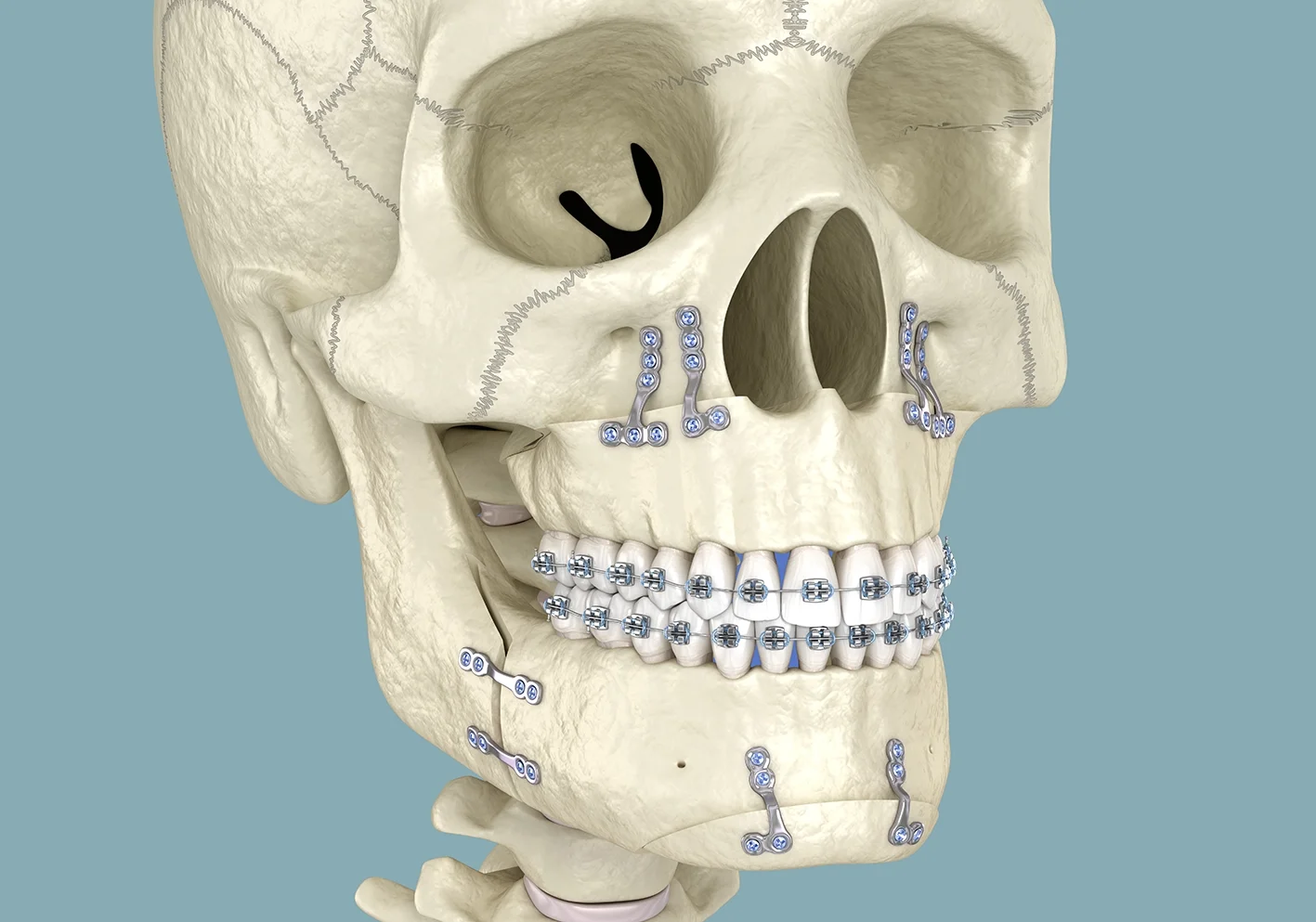
Orthognathic surgery involves carefully repositioning the upper jaw, lower jaw, chin or a combination of these structures. The bone is divided through incisions inside the mouth, moved into the planned position and stabilised with small titanium plates and screws.
The word orthognathic refers to creating the correct relationship between the jaws. Contemporary treatment is increasingly described as orthofacial surgery because planning considers facial harmony alongside bite function.
The goals of treatment may include:
Creating a stable and functional bite
Improving chewing and speech
Correcting facial asymmetry
Balancing the facial profile
Improving lip closure
Reducing excessive gum display
Supporting the upper airway in selected patients
Protecting long-term dental and periodontal health
Virtual 3D planning has become part of routine orthognathic care and allows the expected effect of jaw movements on the facial profile to be assessed before surgery.
SIGNS & SYMPTOMS
Who needs Jaw Surgery?
Orthognathic surgery may be recommended for:
Class II jaw relationship: The lower jaw is positioned too far back, often producing an increased overjet, a receding chin or difficulty closing the lips comfortably.
Class III jaw relationship: The lower jaw appears too far forward, or the upper jaw has not developed sufficiently, resulting in an underbite.
Open bite: The front teeth do not meet when the back teeth are together, affecting biting, speech and sometimes tongue function.
Facial asymmetry: Uneven growth may cause the chin, dental midlines or jaw angles to deviate to one side.
Crossbite or narrow upper jaw: The upper jaw may be too narrow, causing some or all of the upper teeth to bite inside the lower teeth.
Vertical jaw imbalance: Excessive or reduced vertical growth can cause a long-face pattern, excessive gum display or reduced lower facial height.
Sleep-disordered breathing: In selected patients, advancement of both jaws may enlarge the upper airway and form part of the treatment for obstructive sleep apnoea.
Post-traumatic or acquired deformity: Jaw correction may also be required after facial trauma, previous surgery, infection or tumour treatment.
Signs you may require Jaw Surgery
Assessment may be helpful if you have:
Difficulty biting or chewing effectively
An underbite, severe overjet or open bite
Facial asymmetry or a noticeably deviated chin
A receding or prominent lower jaw
Difficulty closing your lips without strain
Excessive gum display when smiling
Significant tooth wear caused by an abnormal bite
Speech difficulties associated with jaw position
Breathing problems or obstructive sleep apnoea
A bite that cannot be corrected predictably with orthodontics alone
ASSESSMENT & PLANNING
Comprehensive Assessment & Full-digital Planning
Orthognathic treatment is jointly planned by the oral and maxillofacial surgeon and orthodontist.
Your assessment may include:
Detailed facial and oral examination
Assessment of the bite and jaw joints
Facial and dental photographs
Digital intraoral scans
CBCT or medical CT imaging
Three-dimensional facial scanning
Cephalometric and facial proportion analysis
Airway assessment where clinically relevant
Virtual simulation of the proposed jaw movements
The bone scan, digital dental models and facial surface scan can be combined to create a virtual patient. The jaws are then repositioned digitally, allowing movements in all three dimensions—including translation, rotation, pitch, roll and yaw—to be assessed before surgery.
This planning process is particularly valuable for facial asymmetry and complex bimaxillary surgery. It also enables careful evaluation of the smile line, dental midlines, chin position and overall facial profile. The article provided describes a structured virtual workflow incorporating bone, occlusion and facial surface data, followed by surgical simulation and accurate transfer of the plan to the operating theatre.
PROCEDURE & TREATMENT OPTIONS
The Orthodontic-Surgical Process
Phase 1 – Assessment and coordinated planning
The orthodontist and surgeon confirm the diagnosis, treatment goals and likely surgical procedure. Wisdom teeth or other preliminary treatment may be completed where necessary.
Phase 2 – Pre-surgical orthodontics
Braces or other orthodontic appliances align the teeth within each jaw and remove dental compensations that have developed around the skeletal discrepancy.
This stage commonly lasts approximately 9–18 months. The bite may temporarily appear worse as the teeth are positioned correctly for surgery.
Phase 3 – Final surgical planning
Updated digital scans, photographs and imaging are obtained. The final bite and jaw movements are planned virtually, often to fractions of a millimetre.
Phase 4 – Jaw surgery
Surgery is performed under general anaesthesia in a hospital setting. Most incisions are inside the mouth, so visible facial scars are generally avoided.
Phase 5 – Recovery and postoperative orthodontics
The jaws heal while guiding elastics help establish the bite. Orthodontic treatment then continues for several months to refine the final tooth positions.
The complete orthodontic-surgical journey commonly takes approximately 18–36 months, depending on the complexity of treatment.
Surgical Procedures
Upper Jaw Surgery (Le Fort I Osteotomy): The upper jaw is separated from the skull base and repositioned forward, backward, upward, downward, or rotated as needed. This corrects midface deficiency, open bites, excessive gum display, and crossbites.
Lower Jaw Surgery (Bilateral Sagittal Split Osteotomy - BSSO): The lower jaw is split and repositioned forward or backward to correct underbites, overbites, and facial profile problems.
Two-Jaw Surgery (Bimaxillary Surgery): Both upper and lower jaws are repositioned to correct complex skeletal relationships and achieve optimal facial balance.
Chin Surgery (Genioplasty): The chin bone is repositioned or reshaped to improve facial profile and balance, often performed in combination with jaw surgery.
Adjunctive Procedures: Additional procedures may include turbinate reduction for breathing improvement, septoplasty for deviated septum, or soft tissue procedures for optimal aesthetics.
Surgery typically takes 2-4 hours depending on complexity. Incisions are made inside the mouth, leaving no visible facial scars. Bones are precisely repositioned and secured with small titanium plates and screws.
Why Choose A/Prof Christian Freudlsperger?
Specialist Orthognathic Expertise: Associate Professor Christian Freudlsperger has extensive experience in correcting Class II and Class III jaw relationships, open bite, asymmetry and complex dentofacial deformities.
Advanced Virtual Surgical Planning: CBCT imaging, digital dental scans and facial scans are combined to create a virtual patient. Jaw movements and facial changes can be simulated before surgery, supporting accurate and individualised planning.
Function and Facial Harmony: Treatment is planned not only to create a stable bite, but also to achieve balanced facial proportions, appropriate tooth and gum display, lip support and chin position.
Close Orthodontic Collaboration: Associate Professor Freudlsperger works closely with referring orthodontists throughout preparation, surgery, postoperative refinement and long-term follow-up. Close cooperation between orthodontist and surgeon remains fundamental to a successful outcome.
RISKS & RECOVERY
Understanding the Risks
Orthognathic surgery is safe with high success rates when performed by experienced surgeons, but potential risks include swelling (significant but temporary), numbness or altered sensation (common initially, usually resolves over months, permanent changes rare), infection (uncommon, treated with antibiotics), bleeding (monitored closely), jaw joint discomfort (usually temporary), relapse (jaw position shifting—rare with proper planning and fixation), and anesthesia-related risks.
A/Prof Freudlsperger will discuss all potential risks, benefits, and alternatives specific to your individual case in detail during your consultation, ensuring you have a complete understanding before proceeding with treatment.
What to Expect During Recovery
Hospital Stay: Typically 1-2 nights for monitoring and pain management.
First Week: Significant facial swelling (peaking at 48-72 hours), limited mouth opening, liquid/soft diet only, discomfort managed with medication, possible minor bleeding, and fatigue. Rest essential.
Weeks 2-6: Swelling gradually decreases (70-80% resolved by 2-3 weeks), gradually advance diet to soft foods, return to light activities and work (typically 2-3 weeks), and numbness begins improving.
Months 2-3: Most swelling resolved, continued gradual numbness improvement, return to normal diet and activities, and resume post-surgical orthodontics.
Months 6-12: Final refinement with orthodontics, continued subtle improvements in swelling and sensation, and achievement of final aesthetic and functional results.
Post-Operative Care
Critical instructions include maintaining meticulous oral hygiene with prescribed rinses, following strict dietary progression, taking all prescribed medications, avoiding strenuous activity initially, no smoking (severely impairs healing), sleeping with head elevated for first two weeks, wearing elastic bands as directed, and attending all follow-up appointments.
Close orthodontic and surgical follow-up ensures optimal healing and achievement of treatment goals.
Frequently Asked Questions
1. Do I really need jaw surgery, or can braces fix my bite?
Braces move teeth but cannot fully correct a significant difference in the size or position of the jawbones. Surgery may be recommended when orthodontics alone would leave an unstable bite, compromised facial balance or excessive dental compensation.
The decision remains yours. Your surgeon and orthodontist will explain the non-surgical and surgical options, expected benefits, limitations and risks.
2. Will corrective jaw surgery change my face?
Yes. Repositioning the jaws changes the relationship between the teeth, lips, nose, chin and facial profile.
These changes are deliberately planned to improve facial balance as well as bite function. Three-dimensional planning helps demonstrate the direction and extent of the expected change, although a simulation cannot guarantee the exact final soft-tissue appearance.
3. How painful is jaw surgery, and how long is recovery?
Most patients describe pressure, swelling, congestion and stiffness as more prominent than severe pain. Medication is provided to manage discomfort.
Many patients need approximately two to three weeks away from work or study. Bone healing continues for several weeks, while residual swelling and altered sensation may improve over several months.
4. Will my jaw be wired shut after orthognathic surgery?
Usually not. Modern treatment generally uses titanium plates and screws to stabilise the jaws internally.
Light orthodontic elastics are commonly used to guide the bite during healing. Traditional prolonged jaw wiring is now uncommon but may occasionally be required in specific situations.
5. Do I need braces before and after jaw surgery?
Most patients require orthodontic treatment before and after surgery.
Before surgery, the teeth are positioned correctly within each jaw so that they will meet properly after the bones are repositioned. Following surgery, the orthodontist refines the final bite. In selected patients, modified or surgery-first pathways may be considered after joint assessment by the surgeon and orthodontist.

BOOK YOUR APPOINTMENT
Jaw Surgery for Misalignment
If you have an underbite, receding lower jaw, open bite, facial asymmetry, narrow upper jaw, significant overjet or a bite that cannot be corrected with orthodontics alone, please contact Oral & Facial Surgery to arrange a specialist consultation.
We welcome referrals from orthodontists, dentists, sleep physicians, ENT surgeons, medical specialists and general practitioners.